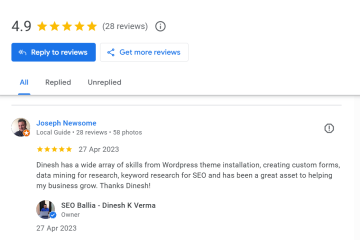


Google reviews are no longer just feedback — they’re a powerful driver of rankings, trust, and revenue. I’m Dinesh K Verma, and with 13+ years of hands-on SEO and reputation management experience, I’ve seen firsthand how review strategy can make or break a business online.
Over the years, Google reviews have become a stronger local ranking factor. I’ve personally watched businesses climb local search results simply by improving review quality, increasing response rates, and managing customer feedback more strategically. Reviews don’t just influence perception — they influence real SEO outcomes and real sales.
Why Google Reviews Matter More Than Ever
Google reviews directly impact how a business performs in search results and how customers decide where to spend their money.
How reviews influence business success:
-
Local SEO rankings — Reviews are a confirmed ranking signal.
-
Click-through rate — Higher ratings earn more clicks.
-
Customer trust — People trust peer feedback more than ads.
-
Conversions — Positive reviews increase calls, visits, and purchases.
From my experience:
I’ve seen a client with fewer reviews but better responses outrank competitors with more reviews but poor engagement. I’ve also worked with businesses that lost leads for months because negative reviews were ignored and allowed to damage trust.
Key truth:
-
Reviews influence rankings
-
Reviews influence buyer decisions
-
Review management is no longer optional
What Is a Google Reviews Management Tool?
A Google reviews management tool is software designed to help businesses handle customer reviews efficiently at scale.
These tools typically help you:
-
Collect new reviews
-
Monitor incoming reviews
-
Respond to customer feedback
-
Analyze sentiment and trends
-
Send automated review requests
Personal insight:
Years ago, review management was manual — logging in daily, copying responses, and tracking feedback in spreadsheets. That approach simply doesn’t scale. As businesses grow, automation and centralized tools become essential to maintain quality and speed.
Problems Businesses Face Without Review Management Tools
Without a proper system, businesses often struggle with:
-
Missing negative reviews until it’s too late
-
Slow or no responses
-
Inconsistent brand voice
-
Lost ranking opportunities
-
Damaged online reputation
Real-world experience:
Many businesses contact me after reputation damage has already happened. Late responses often make situations worse — customers feel ignored, and Google sees poor engagement signals.
Once reputation trust is lost, recovery becomes harder and slower.
Key Features to Look for in a Google Reviews Management Tool
Review Monitoring & Alerts
Instant alerts ensure negative reviews are addressed quickly.
Why it matters:
Fast responses reduce brand damage and build customer confidence.
My benchmark:
I aim to respond to reviews within 24–48 hours, ideally sooner for negative feedback.
Review Response Management
Responding to every review builds credibility and helps SEO.
My response strategy:
-
Stay calm and professional
-
Take ownership when needed
-
Never argue publicly
-
Show empathy and solutions
Customers don’t expect perfection — they expect accountability.
Review Request Automation
Good tools help generate more reviews using Google-compliant methods.
Safe best practices:
-
Send follow-up requests after service
-
Use QR codes or direct review links
-
Keep requests neutral and honest
What not to do:
-
No incentives
-
No fake reviews
-
No manipulation or review gating
Analytics & Reporting
Analytics reveal:
-
Rating trends
-
Sentiment shifts
-
Star rating averages
-
Customer behavior patterns
SEO insight:
Consistent review growth often correlates with stronger local map pack rankings, improved brand trust, and better conversion rates.
Best Google Reviews Management Tools
Here are tools I’ve personally tested or used:
Podium
Best for: Service businesses and SMBs
Pros: Strong messaging + review requests
Limitations: Pricing can be high
Birdeye
Best for: Multi-location businesses
Pros: Advanced automation and analytics
Limitations: Learning curve
NiceJob
Best for: Small businesses
Pros: Easy review generation
Limitations: Limited advanced reporting
Grade.us
Best for: Agencies
Pros: White-label features
Limitations: Not ideal for beginners
Google Business Profile (Manual)
Best for: Very small businesses
Pros: Free
Limitations: Time-consuming and limited
Honest note: Some tools aren’t cost-effective for small businesses, and others require onboarding time to use properly.
How I Personally Manage Google Reviews for Clients
This is where real strategy matters.
My step-by-step process:
-
Audit existing reviews
-
Identify negative patterns
-
Fix recurring service issues
-
Build a review acquisition system
-
Create structured response templates
-
Monitor feedback weekly
-
Adjust strategy based on performance
Industries I’ve worked with:
-
Legal services
-
Real estate
-
Medical practices
-
Local service businesses
-
E-commerce
What actually works:
-
Consistency beats shortcuts
-
Quality responses outperform volume
-
Customer experience drives review success — not gimmicks
Google Review Guidelines You Must Follow
Google enforces strict policies. Violations can result in review removal or profile suspension.
Core rules:
-
No fake reviews
-
No incentives
-
No review gating
-
No manipulation
Real cases:
I’ve seen businesses lose hundreds of reviews or get profiles suspended due to policy violations. Recovery is difficult and sometimes impossible.
Common Google Reviews Mistakes I’ve Seen Over the Years
-
Ignoring 3-star reviews
-
Using copy-paste responses
-
Getting defensive in replies
-
Trying to remove reviews instead of resolving issues
-
Responding emotionally instead of professionally
These mistakes come from lack of strategy — and I’ve learned over time that tone and consistency matter more than speed alone.
How Google Reviews Tie Into SEO & Local Rankings
Google evaluates:
-
Review velocity (how often reviews are added)
-
Keywords in reviews
-
Freshness and frequency
-
Engagement signals (responses, clicks, activity)
From hands-on SEO work:
Review growth directly supports:
-
Google Business Profile optimization
-
Local pack rankings
-
Branded search visibility
When reviews improve, rankings often follow.
Who Should Use a Google Reviews Management Tool?
Ideal users:
-
Small businesses
-
Agencies
-
Multi-location brands
-
Service-based companies
My recommendation:
Manual management works only at low volume. Once reviews become frequent or multi-location, a tool becomes necessary to maintain consistency and efficiency.
Final Thoughts
Google reviews can drive rankings, credibility, and revenue — but tools alone won’t fix reputation problems. Strategy, ethics, and consistency matter more than software.
Over the last 13+ years, I’ve learned that real reputation management comes from:
-
Honest customer engagement
-
Ethical review practices
-
Long-term commitment
-
Real-world execution, not theory
Tools support success — but experience drives results.